


Yakuyoke Omamori – Misfortune Protection Amulet from Meiji Shrine
Yakuyoke Omamori – Misfortune Protection Amulet from Meiji Shrine
Low stock: 1 left
Couldn't load pickup availability
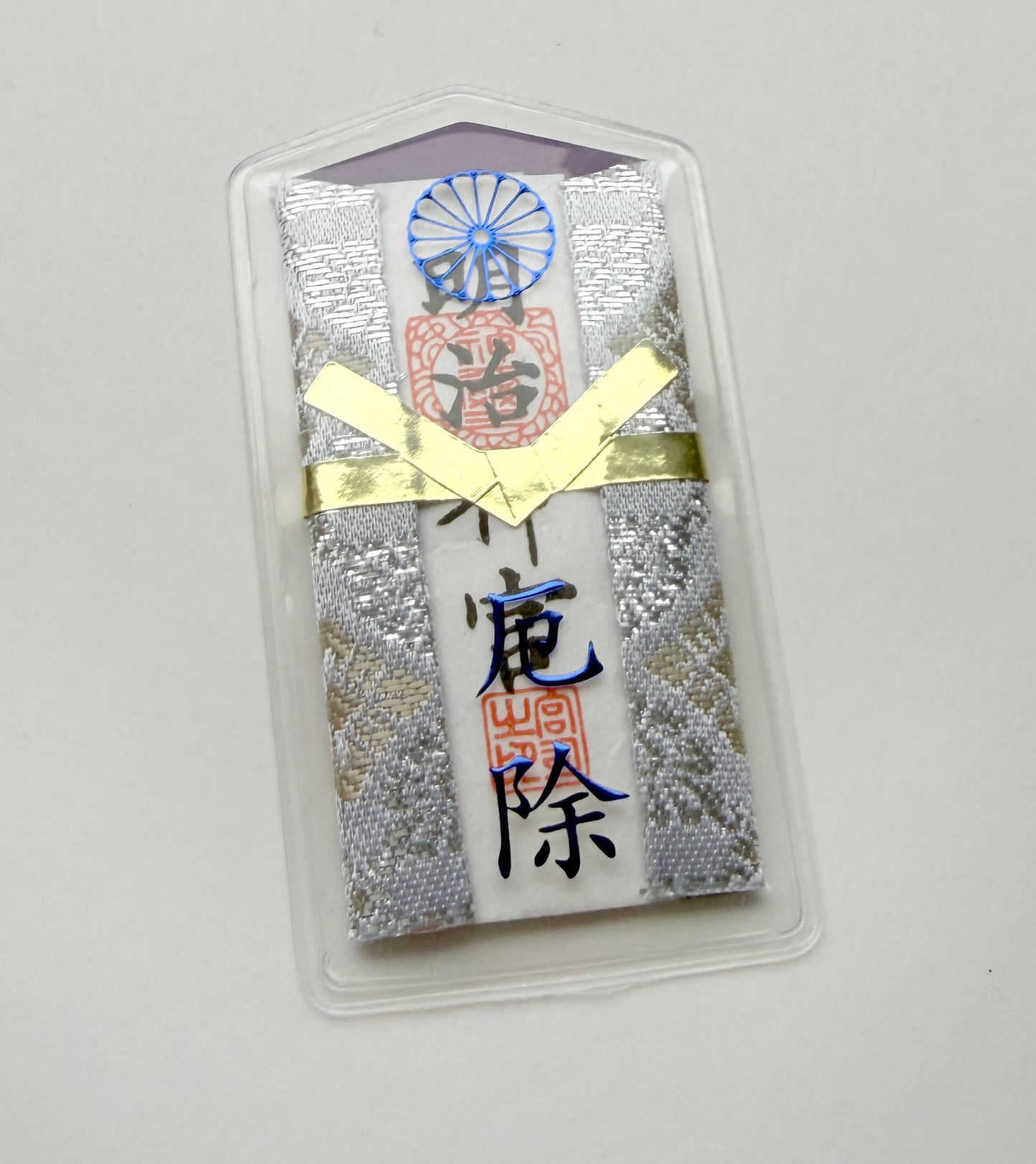
A traditional Japanese yakuyoke omamori intended to ward off misfortune, remove negative influence, and provide protection during critical life years, including yakudoshi (unlucky years), as well as for general spiritual safeguarding.
Acquired: Meiji Shrine, Shibuya, Tokyo, Japan – March 2025
Year Made: Unknown
Year Consecrated or Blessed: March 2025
Religion: Shinto
Use:
Carried for protection against misfortune, negative influence, and instability. Traditionally used during yakudoshi (unlucky years), but also appropriate for anyone seeking general protection, transition support, or spiritual cleansing. Commonly kept in a bag, pocket, or near the body.
Description:
This yakuyoke omamori originates from Meiji Shrine, one of Japan’s most important Shinto shrines dedicated to protection, purification, and renewal. The characters 厄除守 (Yakuyoke Omamori) translate to “misfortune removal amulet,” indicating its role in dispelling harmful influences and stabilizing one’s path.
According to shrine tradition, this talisman may be received not only by those experiencing yakudoshi, but also by individuals outside those years who seek preventative protection. Rather than attracting luck, yakuyoke focuses on clearing obstacles, neutralizing unseen disturbances, and maintaining balance during periods of vulnerability or change.
In Japanese belief, certain ages are considered spiritually unstable and require added protection:
Yakudoshi (Unlucky Years):
Men: 25, 42 (most severe), 61
Women: 19, 33 (most severe), 37
Protective Transition Years:
Men: 24, 26, 41, 43, 60, 62
Women: 18, 20, 32, 34, 36, 38
These ages are traditionally counted using the Japanese system; Western age is typically one year younger.
This omamori is not a charm of chance, but a protective object rooted in Shinto purification practice. It is meant to quietly accompany the bearer through unstable periods, offering spiritual defense rather than overt intervention.
Share


Each item comes with a Certificate of Authenticity and a detailed description.